
BOARD OF DIRECTORS
Meet the Board
Oregon CURE is governed by a volunteer board of directors committed to criminal justice reform and supporting families. You can read about each of our board members below.
 Karen
Karen
President
President
My name is Karen and I first became involved with Oregon CURE in 2000 after my only two children were arrested and incarcerated. I learned about, and began working on, the repeal of Measure 11, and thus became involved with multiple like-minded organizations—Oregon CURE being one of them. I came and went in my involvement with Oregon CURE over the years as my time allowed and in 2019 became the President. I find as a nation we have seen some much-needed changes in criminal justice reform in the last several years and I look forward to seeing that continue. There is much work to be done and we appreciate the support of all who contribute to that work. Personally, I appreciate our board of directors, those who contribute information for our newsletter, donors, as well as volunteers. We couldn’t continue our mission without you. Thank you!
T
Terry
Secretary
Secretary
I joined Oregon CURE in 1998, having learned about it through my involvement with Citizens to Repeal Measure 11. My professional background includes teaching and case management for Developmentally Disabled people, case management in Mental Health, Disability Analyst for Social Security Disability applicants, A/D counselor – a wide range of experience. My reason for becoming involved with CURE was after one of my DD clients murdered another one of my DD clients. My father had been an attorney and a judge in Washington State: I thought maybe I knew something about how the system worked, but found I actually did not. My client was represented by a court-appointed attorney, and was never given any opportunity to speak in court during his trial. I volunteered with DOC’s Home for Good program in 2003-4; was Oregon CURE’s Corresponding Secretary for 5+ years; edited, updated and wrote many of our publications, attended Transition Fairs, and proposed and continue to present quarterly at the Salem Orientation for Family Members and Friends of the newly incarcerated. I also helped start a CoDependents Anonymous 12-Step meeting at OSP in 2008 that continues to meet twice monthly, and attend monthly Lifers Club and 7th Step Club meetings, and participate in the Insight Hearings that were developed to help people prepare for their Parole Hearings.
 Paul
Paul
Senior Treasurer
Senior Treasurer
I am Paul. My wife and I joined an Oregon CURE support group in 2013. We were looking to learn the ins and outs of what happens when someone has been arrested and is headed to prison.
It was and is a great place to share and get questions answered, as well as answer questions for others that are going through a new chapter in their life’s journey. In 2014, we joined the Oregon CURE board of directors. There was a need for more volunteers to share the tasks that the board president in particular was handling. I offered to take on the treasurer’s job. I also offered to maintain the list of names that are on the Oregon CURE mailing list. Since the beginning as a board member, I have helped with keeping the website going, monitoring the email accounts and have answered regular mail from individuals looking for help. When needed, I have returned phone calls from individuals seeking information, help or just needing to have someone listen to them. All these things, while challenging, are rewarding when someone says thanks for the help.
I have learned a lot about the legal justice system through all this and am better off for that knowledge. I encourage anyone to get involved at whatever level works for them and fits their talents. Seems there are always more items to tackle in support of those serving time on both sides of the bars.
2026 update. After doing the things I wrote about above, I have handed most all of the items off to newer board members and stepped back some. I will continue to help out where I can and continue to support the mission of Oregon CURE for the foreseeable future.
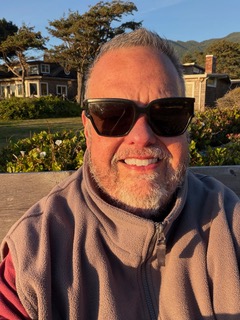 Scott
Scott
Correspondence Specialist
Correspondence Specialist
I joined the CURE Board several years ago and am excited to serve as the Correspondence guy. I retired from Apple in 2019, but my most important credential is having spent 15 years incarcerated in Florida, Washington, and Oregon. I have the unique position of having seen the inside as an Adult in custody while being actively involved in various Community Policing efforts (including a stint as the Chair of Portland Police’s Citizens Budget Review Committee under Chief Charles Moose). In 2014, I finished a doctorate in Transpersonal and Developmental psychology. I have been a volunteer at Oregon State Penitentiary, working with the Lifers’ Unlimited Club, 7th Step, and pitching in where needed. My personal focus is not post-prison, but quality of life for the Adults in Custody and line staff who are doing life together. I retired to Arch Cape, Oregon, to do Jungian Depth Astrology, graphics, and social media for the Cannon Beach Fire Department (and whoever else asks me). I currently play music for two seaside churches and hang with my Jack Russel sidekick, Lucy.
O
Olivia
Newsletter Editor
Newsletter Editor
When I was 22 years old, my teenage brother was placed in custody, facing a sixteen-year sentence for gang involvement. For the next decade, I watched his journey to adulthood unfold through handwritten letters, recorded phone calls, and seeing his aging face behind glass. I joined Cure in 2018 and attended support groups. I listened to their stories and told my own. Despite my brother’s recent release, I’ve come to understand that our challenges don’t end there. Joining the board has been a fortunate opportunity for me, and I hold deep respect for the important work they do. My connection to the prison system, an unfortunate sentiment shared by many, serves as a driving force to extend support to all those in custody and their loved ones.
 Deb
Deb
Treasurer
Treasurer
alone.
 Kyle B.
Resource Specialist
Resource Specialist
T
Toni
Education Specialist
Education Specialist
I am happy to have the opportunity to serve on the CURE board. In recent months I’ve been on the fast track in learning about the corrections system in Oregon. Before my son went to prison, I had no idea how many perceptions I had about the correction system were not just wrong, but so simplistic. It is not at all like the TV shows. Almost as shocking was the lack of information my friends and I had about the DOC. So, like many families in my situation, I started looking for ways to educate myself about the system and get involved. I wanted to join a group whose mission is to help incarcerated individuals and their families. I wanted to work on access to education and communication between prisoners and family. Education has been shown to help individuals reintegrate when they are released and having a close relationship with family to support them helps them not to reoffend. I am a retired educator; I taught for 32 years. My students ranged from Kindergarten to University. I believe that education is the great equalizer. In this country, public education is available to all students. Whenever there is a barrier to
public education, we must remove that barrier. I came to CURE because there is a barrier to access public education for most incarcerated people in Oregon prisons. I want to work on helping to provide that access. CURE has provided a way to partner with individuals and institutions to work on this problem. Another problem in prisons is lack of access to communication, specifically the ability to make phone calls. The Department of Corrections states clearly that incarcerated people need to stay connected to family and friends. But this is not always the case. For example, the largest prison population in Oregon is housed at Snake River Correctional Institution. Physical access from the major urban centers is a 12 hour round trip drive or a $500+ round trip flight to Boise and car rental to get to Snake River. There is no train or bus service. This makes having access to phones and video stations extremely important. Yet for various reasons, phones are not easily available to all AIC’s. These problems of access require a long-term commitment to make change. CURE is committed to working to make real change no matter how long it takes. As part of this group, I am learning to be patient yet persistent. It is a great pleasure to be part of the changemaker that is CURE.
 Randy
Randy
Retired ODOC
Retired ODOC
Robert (Randy) Geer worked for the Oregon Department of Corrections for nearly thirty-three years. He began his career as a Correctional Officer in 1983 at the Oregon State Penitentiary. He ended his career as the Administrator of Inmate Services statewide at the ODOC central office. Among the assorted other positions he held were Recreational Specialist, Recreation Yard Supervisor, Activities Manager, Operations Coordinator for New Prison Construction, Central Emergency Preparedness Coordinator, and statewide Administrator of Mail and Libraries. Among the more noteworthy projects Randy worked on included in-cell televisions, distance visiting, enhanced and improved phone calls between Adults-in-Custody and their families, cultural celebrations, music concerts, music players, the PRAS rule, Breaking Barriers, Cognitive Self-Change, Pathfinders, and improved visitation. Randy retired in April of 2016. Randy spent his formative years working directly with prison populations and he continued to promote and practice a cooperative approach to corrections throughout his career. What makes Randy’s story unique is that he is a second generation correctional professional. His father was killed by an inmate at the Oregon State Penitentiary in April 1972. Like Randy, Bob Geer believed in the efficacy and the humanity of allowing Adults-in-Custody to practice self-determination and social interaction. Both he and Randy believed in a model of dynamic security where inmates are engaged in positive and approved social interaction with one another and with the public. Randy originally became involved with CURE while trying to fine tune the concept of distance visiting. He is a strong believer in the CURE mission.
S
Steve
Co-Treasurer
Co-Treasurer
Steve has served on the Oregon CURE board since 2018.
A
Alyssa
Alyssa began serving on the Oregon CURE board in 2026.